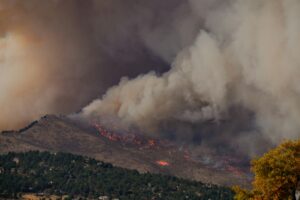
Wildfires pose a recurring threat every year, especially during the summer season. Millions of acres across the country are engulfed in flames, caused by both natural and human factors. While nature-induced fires are beyond our control, we can significantly reduce human-caused fires through education and preventive measures. By following these simple steps, you can minimize the risk and protect your home from wildfires.

Minimize Spark Risks:

Equipment and toys like lawn mowers, weed-eaters, chain saws, welders, tractors, and dirt bikes can all generate sparks that ignite fires. Avoid mowing dry grass or weeds and ensure your yard remains free from dry debris buildup. If you’re operating a tractor, dirt bike, or welder, steer clear of dry grass or brush areas to prevent accidental sparks.

Opt for Fire-Resistant Materials:

When constructing or renovating your home, choose fire-resistant building materials. The roof and exterior surfaces should be composed of non-combustible or fire-resistant materials such as brick, stone, aluminum, tile, sheet iron, asphalt, or slate. If your home currently features wood or cedar, consider the increased risk and explore options to minimize it. In fire-prone areas, constructing homes entirely from concrete and stone can offer enhanced protection against wildfires.

Maintain Your Roof:

A roof covered with leaves, pine needles, branches, or moss becomes highly vulnerable to wildfire damage. Regularly clear your roof to prevent debris accumulation, reducing the risk of ignition during a fire incident.

Clear Dead Plants and Trees:

Ensure that tree branches are trimmed to a height of at least 15 feet. Also, verify that there are no branches in close proximity to your chimney. Remove any branches within 10 feet of the flue opening to prevent sparks from igniting nearby vegetation. Additionally, keep sheds and wood piles at least 30 feet away from your home to minimize the risk of fire spreading from one structure to another.

Understand Your Insurance Coverage:

It’s crucial to familiarize yourself with the limits of your insurance policies, as coverage for natural disasters like floods or earthquakes often requires separate policies. In most cases, wildfires are covered under the comprehensive portion of a homeowner’s insurance policy. However, living in a fire-prone area or being far from a fire station may affect policy pricing. Consult your insurance provider to ensure you have adequate coverage tailored to your specific needs.

By implementing these measures, you can fortify your home’s defenses against wildfires. Remember, prevention and preparedness are key to safeguarding your property and ensuring the safety of your loved ones. Stay informed, stay vigilant, and prioritize wildfire protection to mitigate potential losses.
Save Money On Auto InsuranceOver the years, we’ve all seen auto insurance commercials highlighting the various discounts available in the insurance industry.

While many are familiar with the standard discounts like multi-policy and multi-vehicle, there are additional lesser-known discounts that drivers may be unaware of. To help you potentially save money on your auto insurance, we’ve compiled a list of some of these additional discounts offered by various insurance companies.

Remember to consult your local insurance agent to determine which discounts apply specifically to your situation, as they can vary by state.

Here are some possible auto insurance discounts worth exploring:

  • Multi-Policy: Bundling multiple policies such as auto insurance, home insurance, and boat insurance with the same carrier can lead to savings.
  • Good or Distant Student: If your student maintains good grades (as specified by the insurer), they may be eligible for a good student discount. Providing the insurer with a transcript usually serves as proof. Moreover, if your student attends college far away from home (typically over 500 miles, but this can vary), you may qualify for a discount on the vehicle since it is driven less frequently.
  • Education Level: Drivers holding advanced degrees, such as a bachelor’s degree, may qualify for a discount, similar to the good student discount.
  • Defensive Driver: Completing a carrier-approved defensive driving course could earn you a discount on your auto insurance policy. However, be aware that this type of discount may be limited to certain age groups, so check with your insurance agent.
  • Multi-Vehicle: Insuring multiple vehicles with the same carrier may result in a small discount.
  • Green Vehicle: If you drive an electric or hybrid vehicle, you may be eligible for a discount. Consult your agent to determine if your vehicle qualifies.
  • Anti-Theft: Vehicles equipped with anti-theft systems are statistically less likely to be stolen, making them a lower risk. As a result, you may be entitled to a small discount if your vehicle meets the criteria.
  • Anti-Lock Brakes: Most new vehicles come standard with anti-lock brakes. Inquire with your insurance agent to see if your carrier offers a discount for vehicles equipped with this safety feature.
  • Safe Driver (Accident-Free): Many major insurance carriers reward safe driving by offering discounts to drivers who have been accident-free for a certain number of years. The specific criteria can vary between insurance carriers. Some carriers send you a check throughout the year if you are accident-free.
  • Military: Active and veteran military members often qualify for discounted auto insurance. Verify with your insurance agent to determine if you are eligible.
  • Early Quote/Signing: If you’re considering changing insurance carriers or upgrading your auto insurance, obtaining a quote (and signing up) before your current policy expires may entitle you to a discount. Be sure to check with your agent, as you may need to obtain a quote within a specific timeframe before your policy expiration date.
  • Paid-in-Full: Opting to pay your auto insurance policy in full can result in a cost reduction compared to monthly payments. The discount will be reflected in the price presented to you.
  • Paperless: If you prefer electronic statements over paper statements, you may be eligible for a discount. Most major insurance carriers offer discounts to customers who choose automatic billing and receive emails instead of paper statements.
  • Loyalty: Remaining with your insurance carrier for three or more years may earn you a discount at each loyalty milestone. These rewards often extend beyond policy cost reductions and can even include accident forgiveness.

In summary, familiarizing yourself with the various auto insurance discounts available can help you save money.

Keep in mind that discounts can differ between insurers and states, so consulting your local insurance agent is crucial for determining which ones apply to you.

If you’d like to save on your auto insurance, call our independent insurance agency. We represent multiple top-rated insurance companies and can find you the coverage and pricing that suits your situation best.